Totino's Property Services
  • Home
  • Services
    • Residential
    • Retail / Commercial
    • Gutter Cleaning
    • Post Construction
  • About
  • Contact
  • Tips & Advice
  • Home
  • Services
    • Residential
    • Retail / Commercial
    • Gutter Cleaning
    • Post Construction
  • About
  • Contact
  • Tips & Advice

Don’t Wait for the Last Leaf to Fall

10/6/2026

 
Picture
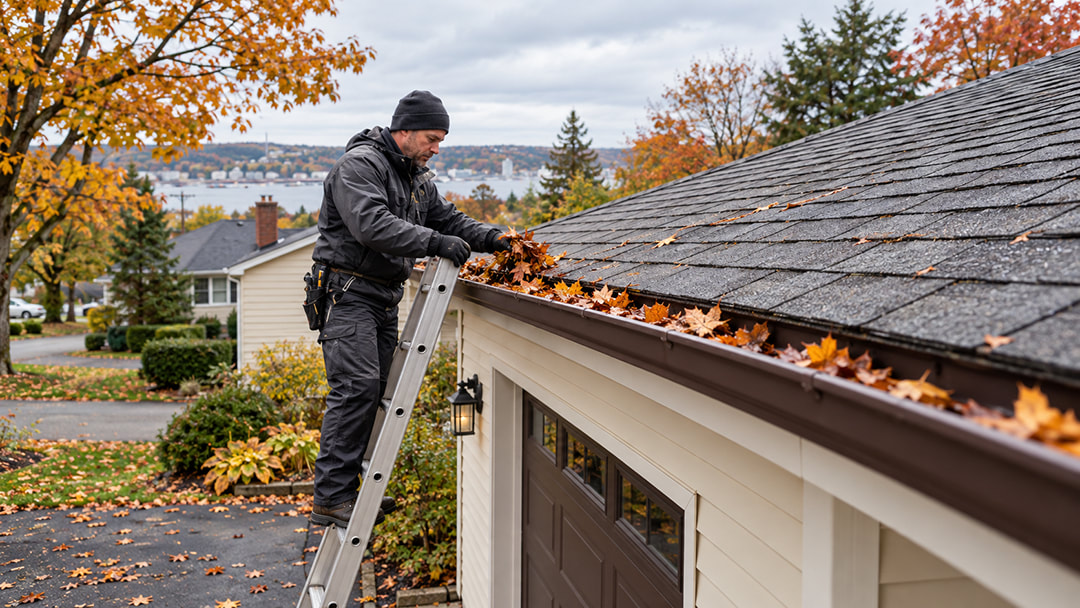
Waiting until the trees are completely bare sounds logical. The problem is your gutters still have a job to do while those leaves are falling. ​ Learn when to clean gutters in HRM and what signs to watch for.
There is a piece of advice we hear every fall: “I’m waiting until all the leaves are down before I clean the gutters.”

On the surface, that makes perfect sense. Why clean them now if more leaves are coming?
The problem is that your gutters don’t get to take October off while you wait. They still have to handle every rainfall that arrives between the first falling leaves and the last bare branch. And here in HRM, that can mean several weeks of wet weather while leaves, pine needles, twigs, roof grit and other debris continue collecting above your head.
​
By the time the trees are finally bare, the gutter may already have been struggling for weeks.
That is why fall gutter cleaning is less about picking one perfect date and more about understanding what is happening around your property.

Picture
Your Gutters Are Working While the Leaves Are Falling
A gutter has a simple job: collect water from the roof and move it away from the building.
When it is clear, you barely notice it. When it is partially blocked, the warning signs can be subtle. Water moves more slowly. A downspout drains, but not as quickly as it should. A corner begins dripping during heavier rain. Debris starts holding moisture inside the gutter.

Then another layer of leaves arrives. And another. Eventually, water reaches the blockage faster than the gutter can move it away. That is when homeowners start seeing water spill over the edge.

​The important thing to understand is that the overflow you see during a storm usually did not begin during that storm. The blockage was already developing.
The rain simply exposed it.
Wet Leaves Behave Differently Than Dry Leaves
A handful of dry leaves may not look like much. Add rain, however, and everything changes.
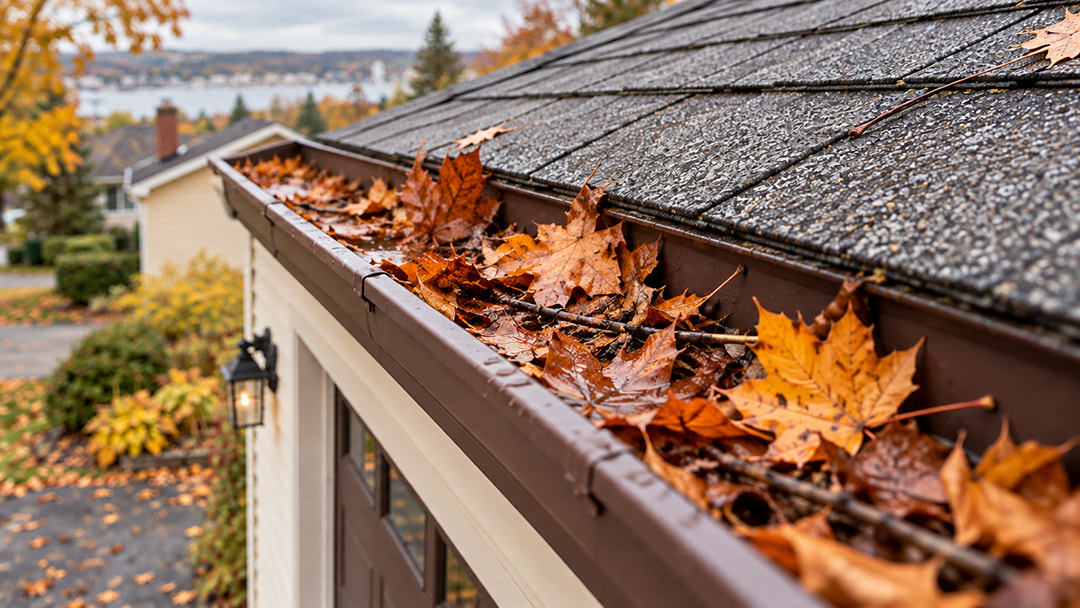
Wet leaves flatten and compact. Smaller debris fills the spaces between them. Pine needles can knit together. Roof grit settles underneath. Twigs create little dams.

What looked like a loose layer of material can turn into a dense, heavy mass surprisingly quickly. That is one reason looking up from the driveway is not always enough.

​A gutter does not need to be overflowing with visible leaves to be restricted.
Some of the most stubborn blockages occur lower down, especially near outlets and inside downspouts where debris becomes compressed.

DID YOU KNOW?

Picture
  • The leaves you can see are not necessarily the material causing the problem.
  • Roof granules, pine needles, seeds, moss, small twigs and decomposing organic matter can settle along the bottom of the gutter and around the downspout opening.
  • From ground level, the gutter may look relatively empty while drainage is already restricted.
  • That is why proper gutter cleaning involves more than removing a few handfuls of leaves from the top.
One Cleaning Schedule Does Not Fit Every Property
There is no universal rule saying every home should have its gutters cleaned on the same weekend. A property surrounded by mature trees is going to behave differently from a newer subdivision with little overhead vegetation.

A home with pine trees nearby may collect needles over a much longer period than a property surrounded by deciduous trees.

​Roof configuration matters too. Valleys in the roof can concentrate water and debris into particular gutter sections. Lower rooflines may receive runoff from upper roofs. Certain corners naturally collect more material than others. Even prevailing wind can make one side of a home noticeably dirtier than the other.

After more than 35 years working around HRM properties, this is one of the practical realities of exterior maintenance: the property tells you what schedule it needs.

The calendar is useful. The condition of the gutter is more useful.

So When Should You Actually Clean Them?
For many properties, the practical answer is not necessarily “once, after the last leaf.” It may make more sense to clean gutters once they have accumulated significant debris, particularly if heavy rain is expected, and then check them again after the majority of leaves have fallen.

Properties with fewer nearby trees may only need one well-timed fall cleaning. Properties surrounded by mature trees may need more attention. The objective is not to keep the gutter perfectly empty every day of autumn. It is to keep enough capacity for water to move freely when it rains. That distinction matters.

What to Look for During the Next Rain
One of the easiest ways to learn something about your gutter system is simply to watch it work.
You do not need to climb a ladder. From a safe location on the ground, take a look during a steady rainfall.

Watch for:
  • Water spilling over the front edge: This is one of the clearest signs that water is not moving through the system properly.
  • Water coming over one particular corner: That can indicate a localized blockage or drainage issue.
  • A downspout with very little water coming out: If a large roof area is feeding that downspout during steady rain, very little discharge may indicate a restriction.
  • Water running down the exterior wall: This deserves attention, particularly if it happens repeatedly.
  • Dripping from gutter joints or seams: Debris and standing water can make existing weaknesses much more noticeable.
  • Pooling near the building: The gutter may be clear while the downspout is still putting water somewhere it should not be.

​These observations give you much more useful information than simply looking at the gutter on a dry afternoon.

Look Down, Not Just Up
When homeowners think about gutters, most of the attention goes to the roofline. But what happens at ground level matters just as much. Follow the downspout with your eyes.
Where does the water go?

Ideally, it should move away from the building rather than being discharged directly beside the foundation. Look for erosion, splash marks, washed-out landscaping or obvious pooling around the end of the downspout.

A perfectly clean gutter cannot do its job properly if the water reaches the bottom and has nowhere sensible to go. It is a complete drainage system, not just a trough hanging from the roof.

Why October Is Such an Important Month
October sits right in the middle of the problem. Enough leaves have usually fallen for buildup to become significant, but the season is not finished. Rain is still coming. Temperatures are moving downward.

And once late fall turns toward winter, access and working conditions become less predictable.
This is why waiting for some imaginary “perfect weekend” when every tree is suddenly bare can backfire.

Sometimes the better question is simply: Are the gutters clear enough to handle the next heavy rain?
If the answer is uncertain, it is worth checking.

There Is Also the Safety Issue
Gutter cleaning looks simple from the ground. Get a ladder. Climb up. Scoop out some leaves.
In reality, you are working at roofline height, often on damp ground, around wet debris, while repeatedly repositioning a ladder.

It is one of those home-maintenance jobs where the difficulty is easy to underestimate.
Second-storey areas, sloped properties, awkward rooflines and hard-to-reach sections increase the challenge considerably.

Professional crews have the equipment, experience and working methods to access these areas properly. There is no prize for discovering that your gutters were clogged while leaning too far from the side of a ladder.

The Goal Is Prevention, Not Panic
Gutter cleaning does not need to be treated like an emergency every fall. It is ordinary property maintenance. And ordinary maintenance works best when it happens before there is a visible problem.

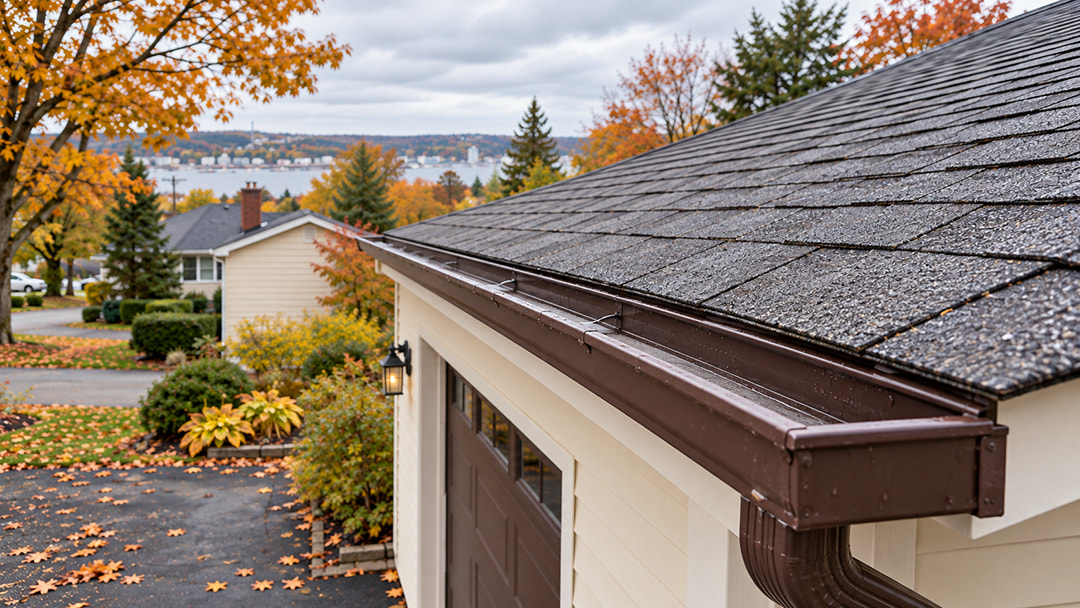
A clear gutter does its job in the background. That is exactly what you want. No overflowing corners. Just rain moving off the roof and away from the property as intended.

Picture
Before the Next Heavy Rain, Look Up
You do not have to wait until the last leaf falls. In fact, depending on your property, you probably shouldn’t. If the gutters are already filling up, October is the time to deal with them while there is still plenty of fall weather ahead.

Totino’s Property Services has been caring for residential and commercial properties throughout HRM for more than 35 years. Our team provides professional gutter cleaning along with window cleaning, post-construction cleaning and exterior property services.

If you are not sure what is sitting in your gutters this fall, let us take care of it before the next heavy rain does the inspection for you.
​

Contact Totino’s Property Services today to schedule your fall gutter cleaning.
BOOK YOUR GUTTER CLEANING

Comments are closed.

    ​Tips & Advice

    Halifax weather leaves its mark on windows, gutters and building exteriors. Here, we share practical advice on what to clean, when to check it, and what to watch for—whether you’re caring for a home, storefront or commercial property.

    Categories

    All
    Property Maintenance
    Window Cleaning


    Disclaimer

    The information provided in this blog is intended for general informational purposes only. Totino’s Property Services makes no representations or warranties regarding the accuracy, completeness, or suitability of the content for any specific situation. Always consult a qualified professional for advice tailored to your property’s unique needs.


CONTACT US
2 Ashberry Court, Upper Tantallon
Nova Scotia B3Z 1N5 Canada
Tel: 902 880.6897   
​[email protected]
QUICK LINKS
Window Cleaning
​Gutter Cleaning
Tips & Advice​
Contact Us
AFFILIATIONS
Picture

2026 Copyright ©Totino's Property Services Limited.
Brand & Website by ALIANT BRANDS